This is part 3 of a 4-part series.
Testing space systems on orbit is costly, constrained, and risky. Yet readiness in space cannot be theoretical. In a contested domain where launch cycles are long and failure is costly, the United States must validate its capabilities before they leave Earth.
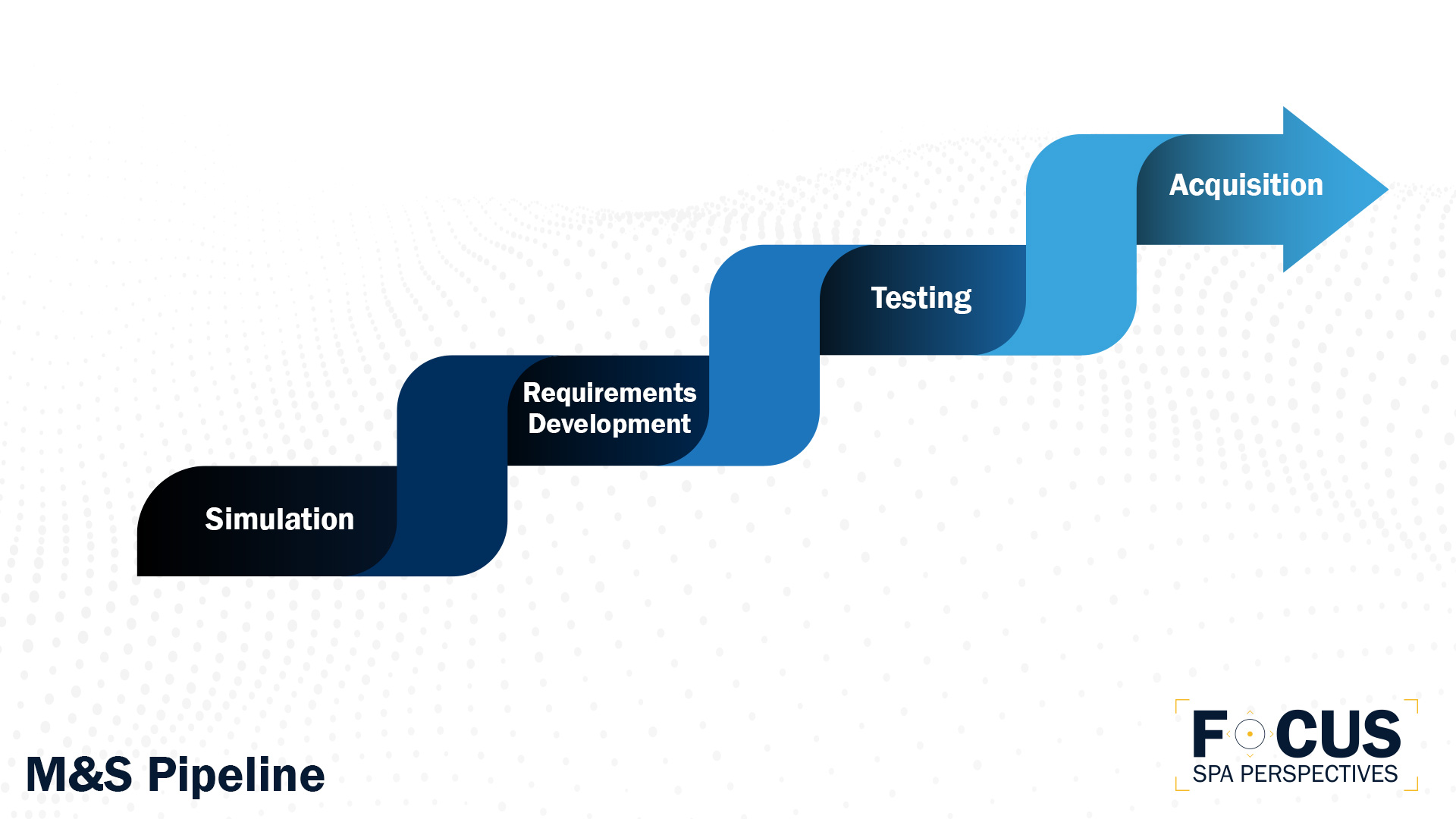
That’s why the nation’s modeling and simulation (M&S) enterprise—developed by industry, national labs, and government organizations—has become, in the words of Dave Meteyer, Group Leader in the Space and Intelligence Division at Systems Planning & Analysis (SPA), an “exquisite” national capability built up “over many decades.”
This tech allow planners to accelerate timelines, identify vulnerabilities, and improve survivability—all before committing to the launchpad. They are no longer support activities; they are strategic infrastructure.
A National M&S Enterprise with Operational Impact
Meteyer describes this as a “tremendous enterprise across the nation,” emphasizing the role of high-fidelity modeling in reducing cost and risk. “We do as much testing as possible through modeling and simulation to minimize those situations where we actually have to go on orbit,” he explained. That shift isn’t just efficient—it’s decisive.
An integrated ecosystem of digital validation tools enables readiness:
These environments allow operators and planners to rehearse complex missions, evaluate system resilience, and develop and refine tactics in advance of launch that simulate real threats and degraded conditions.
Meteyer emphasized the cost savings and timeline acceleration this approach brings:
“Testing space capabilities on orbit can be difficult, costly, and time-consuming.”
Dave Meteyer, SPA Group Leader in the Space & Intelligence Division
By shifting validation earlier, modeling reduces rework, compresses development timelines, and increases decision confidence. In an environment where launch or orbital failure can wipe out years of planning, simulation is not optional—it is essential.
Strategic Alignment Through Futures Command
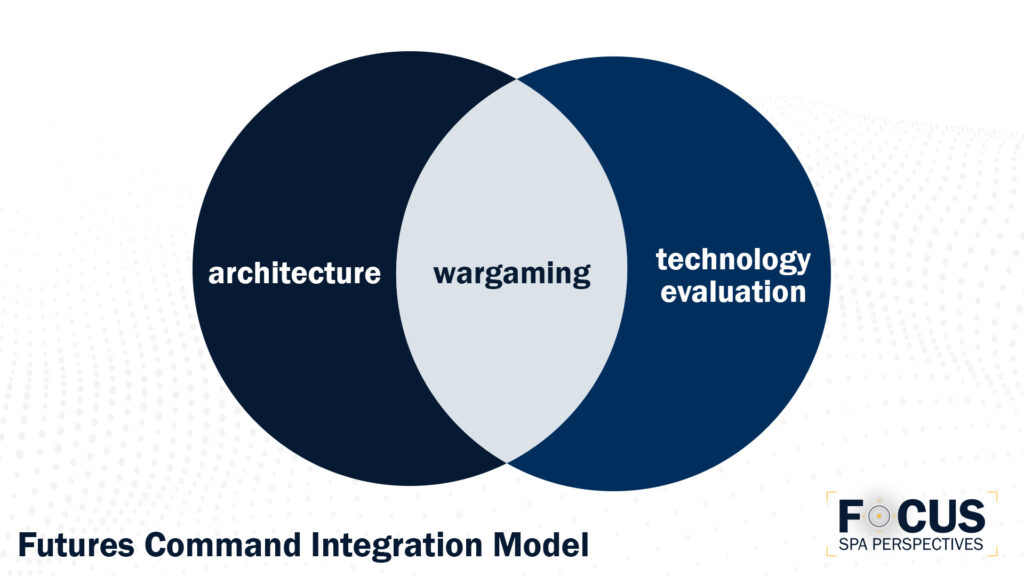
To ensure modeling insights guide long-term planning, Meteyer highlighted the value of Futures Command, a Space Force initiative designed to evaluate the trade space between architectures, operational concepts, and emerging technologies.
This initiative brings together:
- Operator insight from wargaming and TTP development
- Threat-informed architectural analysis
- Assessments of emerging technology readiness
The result is better-aligned acquisition and concept development, anchored in validated models rather than aspirational requirements.
“Futures Command lets us assess the trade space between architectures, tactics, and technologies,” Meteyer said. That synthesis supports informed, force design investments.
Operational Example: Designing for Resilience
Consider a communications constellation intended for contested environments. By simulating adversary jamming, orbital debris hazards, and dual-use platforms, stakeholders were able to shift from a monolithic architecture to a layered, redundant one. This decision, informed by digital modeling, protected both budget and mission effectiveness.
What Policymakers Must Prioritize Now
Fund exquisite modeling infrastructure
- Sustain and expand LVC testbeds and digital twin capabilities
- Require M&S outputs in capability development documentation
Accelerate test-led acquisition
- Integrate modeling into milestone decisions and rapid prototyping
- Align threat simulation timelines with PPBE and FYDP planning
Simulate at the speed of threat
- Use modeling to emulate PLA and Russian counterspace operations
- Build test campaigns that reflect adversary doctrine—not just technical specs
Strengthen the Talent Pipeline
- Invest in rotational billets for analysts and operators
- Expand joint simulation centers focused on space, cyber, and spectrum convergence
Simulation as Strategic Advantage
Modeling, simulation, and analysis are how we move faster than the threat. They allow the U.S. to field validated capabilities, build resilient architectures, and iterate with speed and confidence.
As Meteyer put it, these “great capabilities” help the Space Force “test and assess capabilities … prior to actually putting systems on orbit.” That is how readiness is proven, not promised.
In our next post, we examine how the Space Force ensures readiness before launch—through high-fidelity simulation, digital validation, and architectural foresight. Then we will conclude the series by looking at how the U.S. can operationalize the Space Force’s mission to act in, from, and to space.
Ready Before We Launch
When adversaries are fielding orbital threats in real time, readiness cannot be deferred. Digital validation gives the U.S. a head start: a way to prove performance, refine tactics, and build credibility without risking assets.In an era of space warfare, simulation is not a luxury, it’s the decisive edge.
In our final post, we turn to how these capabilities are integrated across the entire Space Force mission: securing national interests in, from, and to space.
Review previous posts in this series and subscribe today to be informed of the final post.